




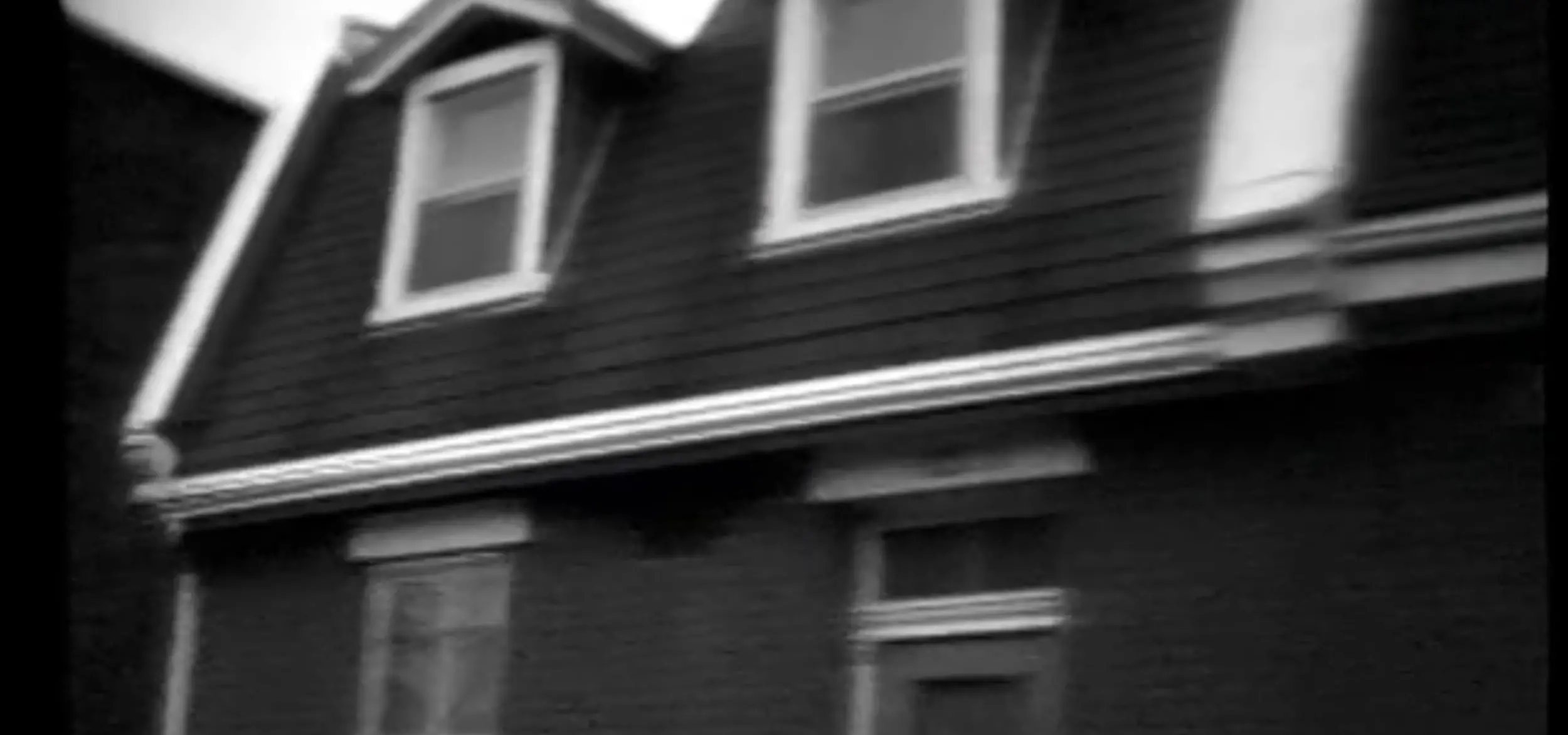
Notre logement, c'est à nous autres.
Comprised of works hand-picked by members of the Vidéographe team, video of the month explores Vidéographe's vast collection and offers insight into the team behind the centre. New month, new video.
Sam Meech is an artist, educator and videosmith from Huddersfield (UK), whose practice combines projection design, interactive video installation, community engagement, and digital textiles. He's interested in the overlap and interplay between digital and analogue hybrid design processes and the possibilities of combining the two in production and performance.
Synopsis
A look at housing co-operatives as a solution to housing problems. This video investigates the advantages of this mode of living and the difficulties encountered with the running of these kinds of co-operatives.
A word from the team
“To learn how to collectively run a communal property … it’s very formative”
This video is chosen with a degree of urgency, in response to Bill 20, proposed by the Housing Minister, Caroline Proulx, which threatens the autonomy and ultimately the survival of the co-operative housing model in Québec. The proposed law is based on a lack of understanding and a mischaracterisation of co-operative models as simply cheap rent, conflating them with social housing. However, these two models have different realities and functions. The bill is, in a sense, a stopgap measure designed to mask chronic underinvestment.
Henri Beauchemin’s 1977 documentary is almost 50 years old but feels contemporary. The problems faced by renters in the 70s - precarity, increasing rents, lack of agency - inspired them to create a co-operative model. These problems are still present today, and if anything are even more severe. The filmmaker speaks with co-operative members and also non-members from neighbourhoods of Côte-des-Neiges, Little Burgundy and Pointe-Saint-Charles, revealing that co-op living is not necessarily easy, but has its benefits for those willing to put in the work. Coop members are both tenants and owners, but approach these roles with agency and a collective conscience rather than self-interest.
Notre logement, c'est à nous autres does a terrific job of lucidly outlining the advantages and disadvantages of living in a coop - agency rather than precarity, the need for diverse skills and experience in managing a building, the challenges of working together, the time required to make it work, and the benefits of democratic decision making and caring for the collective. Interviewees talk about the different specialised committees, such as maintenance and administration, that keep a building in good shape and navigate the complex paperwork necessary to keep the coop running.
The coop is described as a microcosm of society in the way that it brings people together from different ages, backgrounds, economic situations, family models. But it is also a model of how society could be organised - through collective organising, giving agency to tenants rather than landlords, and with a consideration for the needs of the group rather than simply the individual.
Bill 20 will be voted on the 2nd April.
More information can be found here:
https://fhcq.coop/fr/nouvelles/D%C3%A9claration_PL20
You can sign a petition here (open until May 11th):
Sam Meech
Technical Coordinator


