




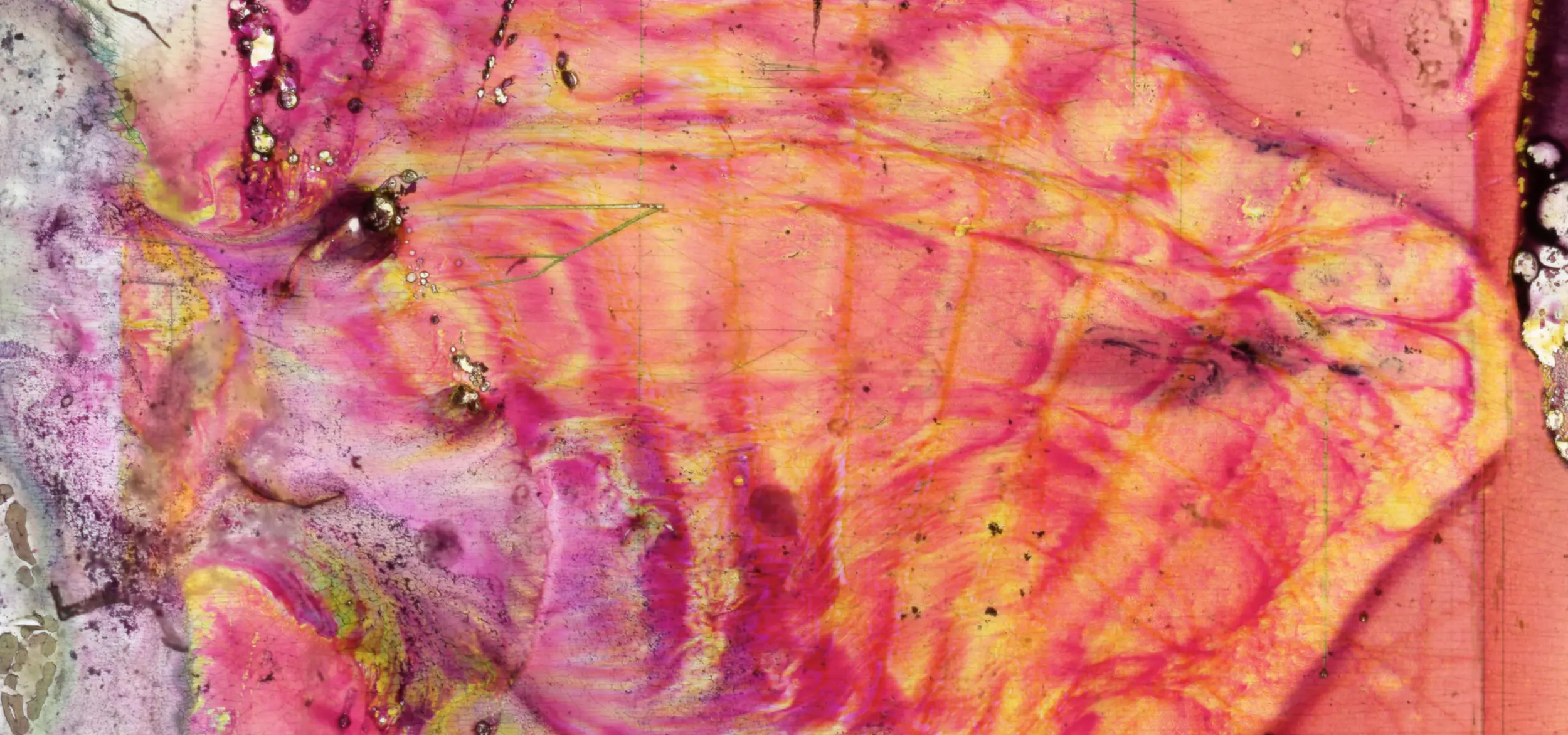
rew/ff — The Machine Breakers
The Machine Breakers was curated by Sophie Dubeau Chicoine as part of rew/ff, Vidéographe's research and creation residency for emerging curators. This residency program is intended to support early-stage curators to develop a new project and, in so doing, acquire new skills and knowledge to enrich their practice.
Sophie Dubeau Chicoine is a curator, writer, and cultural worker based in Tiohtià:ke/Montreal. Her research and practice are inspired by anti-capitalist subjectivities, relationships, and imaginaries. She earned a master’s degree in visual studies from the University of Toronto (2025), where she explored the transitory nature of relational artistic practices in community contexts. Her writings have been published in the journals Esse arts + opinions and ESPACE art actuel. She is the author of Labeur d’amour, a sporadic (love) newsletter documenting independent art spaces in Tiohtià:ke/Montreal.
List of works in program

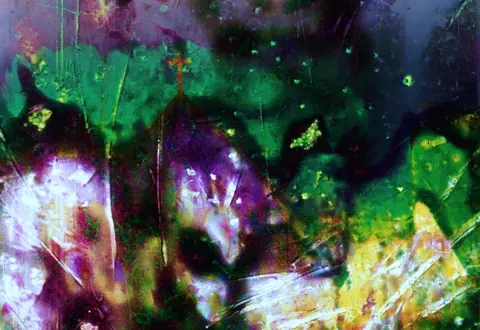
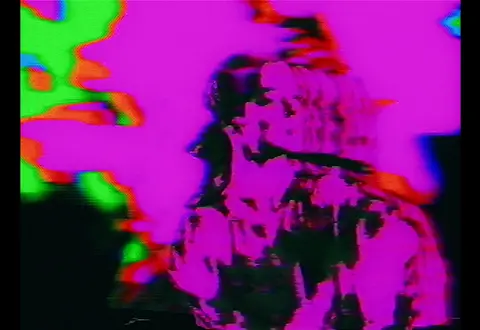
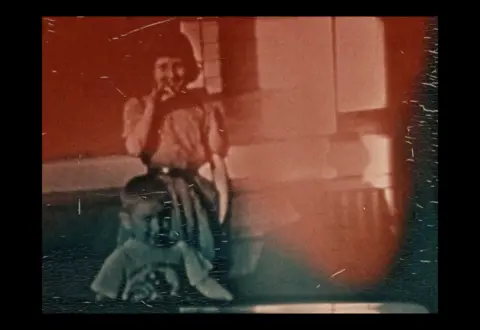
The artists brought together in this program show that the machine is never what it claims to be: neutral, seamless, discreet, and in the service of the greatest number. The text that follows seeks to situate their experiments within a broader tradition of sabotage.
Drawing on the seven selected works, the curator has imagined a transhistorical narrative in seven parts, where strikers, Luddites, hackers, and video artists mingle. What follows is therefore neither a description nor a conventional reading of the works. It is rather a parafiction made of unexpected connections and coincidences. Welcome to a temporal puzzle with neither head nor tail.
Mutt and Jeff, Félix and Chaplin (inspired by Raxlen)
1936. The cinema is packed. As always, the kid settles into the back row, lulled by the hum of the projector. By their hunched shoulders, she recognizes the men sitting in front of her: her father’s colleagues from the factory. Everyone’s come here to forget the troubles outside and to laugh along with Charlie Chaplin's Modern Times.
INT. FACTORY - DAY. A man hammers out orders from a giant screen while others wear themselves out keeping up the frantic pace of the assembly line. The machine’s greed ends up swallowing the protagonist, only to spit him back out like a defective part.
EXT. OUTSIDE THE FACTORY - DAY. A strike breaks out. Lost in thought, the hero tries to leave without even noticing the clashes between strikers and police. But one clumsy gesture is enough to sweep him into the conflict against his will. He comes out of it stunned, without the slightest trace of anger.
Despite the stoic composure of the spectators in front of her, the girl detects their bitterness at the turn events have taken. If the opening of the film captured the absurdity of automated labour to good effect, Chaplin disappoints by disqualifying the workers’ desire to revolt against the power of the machines.
That night, leaving the cinema, she imagines seizing a camera to make another version of the film, one where the man swallowed by the machine brings about its destruction from within. The gears burst apart, the factory collapses. All the misery of modern times goes up in an enormous cloud of smoke.
Love Letter (inspired by Clermont)
1969. Settled in New York, Nam June Paik spends his days taking televisions apart to understand their innards and turn them to other uses. With the help of engineer Shuya Abe, he designs one of the first video synthesizers capable of manipulating visual material live. While the television industry seizes on this technological advance to improve image quality, Paik and his contemporaries amplify its distortions.
Late in his life, Paik pays tribute to Chaplin in one of his robotic works, in which small cathode-ray televisions display warped images of the actor. Paik saw artists as saboteurs.
Uprising (inspired by Vallée)
1811. Thanks to the mechanization of the loom, the mills multiply their textile output, the price of industrial goods drops, and handmade goods become too costly to compete. Artisans leave their workshops for the factories.
In the English Midlands, the machines growl as loudly as the workers, whose expertise has been reduced to monotonous tasks at a lower cost. As mechanized labour pushes them toward a deepening alienation, breaking the machines becomes a last resort for defending their wages and negotiating better working conditions.1
The revolt of these workers, known as the Luddites, was not an attack on technological progress but a resistance to the way capitalists were wielding the machines against them.2 Yet more than two centuries later, some still wrongly describe their actions as “technophobic,” obscuring the nuanced critique this movement levelled at the exploitation of workers and at industrial capitalism. There is nothing innocent about that confusion, though, once you consider who profits from it. After all, we wouldn’t want such a story to inspire more workers to revolt...
On a Full-Moon Night (inspired by Gaucher)
1977. The TV anchor announces Chaplin’s death. Sunk into my couch, I struggle to recall the last time I went to the movies. I wonder what Chaplin would have made of all these new technologies. Only a few months ago, Apple announced the release of its improved PC, the Apple II, and JVC brought VHS to the American market. Still, these technologies would have to be affordable enough to be of any use. That childhood dream of reducing everything to a mush of sound and image has never left me.
The years pass, the ads roll by. IBM brings the Tramp back from the dead to promote its PC-AT, billed as a “tool for modern times.” The ad pitches itself shamelessly to company bosses, touting the productivity of its tools at the expense of my ancestors, the machine operators. As though IBM's takeaway from Chaplin's film was that the real victim in the story was the factory boss barking orders... That night, the moon shines brighter than the television and plunges me into a deafening abyss.
Flashpoint (inspired by Coderre)
1984. An Apple commercial takes place in a factory with a dystopian air. With a sledgehammer, a woman destroys a giant screen representing its rival, IBM. Apple is here to emancipate workers, or so I’m told. Orwell must be turning in his grave. Something clicks: my emancipation will be analogue. I build myself a darkroom, a site of revolution where I develop my images and then alter them in chemical baths. They come out in ways that would be impossible to replicate digitally. The slow destruction of the film material brings me back to forgotten manual know-how. The voice of the Luddites whispers in my ear. In the euphoria of my explorations, I realize my childhood dream has finally come true.
Pirate Signal (inspired by Feulner)
1990. With the advent of the digital, disciplinary societies governed by environments of enclosure give way to diffuse societies of control.3 Reflecting on this shift, Gilles Deleuze advances the idea that piracy has become the form of resistance best suited to this liquid modernity. For if machines have changed their appearance, sabotage too has taken on a new skin. Destroying the outer casing of the device has become a less consequential gesture than poisoning it from within.
The Human Behind the Camera (inspired by Bourque)
2026. Alarming parallels are taking shape today between the struggle of the Luddites and that of artists against artificial intelligence. Once again, it is the myth of convenience that threatens to supplant the skills and creativity of artisans. New as the technology is, a language has already formed to describe (and detect) the images AI generates: hyperglossy, oversaturated, smooth… By erasing reality’s own grain, these fraudulent images unsettle us through their half-visible strangeness. And what if that strangeness were nothing new? What if it were inherent to the capitalist use of machines and to the production of images?
Paying no heed to convenience, the artists brought together in this program prove that experimentation finds its singularity precisely in its imperfections and its flaws, in short, in everything that resists the flawlessly false image. By derailing video technologies, both analogue and digital, these practices bring out the noise the system tries in vain to conceal. Their sabotage carries the scent of sweet revenge.
1. Victor Cachard, Histoire du sabotage: Des traîne-savates aux briseurs de machines, vol. 1 (Éditions LIBRE, 2022), 89.
2. Ibid., 87.
3. Gilles Deleuze, “Postscript on the Societies of Control,” trans. Martin Joughin, October 59 (Winter 1992): 3–7. Originally published as “Post-scriptum sur les sociétés de contrôle,” L'autre journal, no. 1, May 1990.


